
When is “too much tech”, too much??
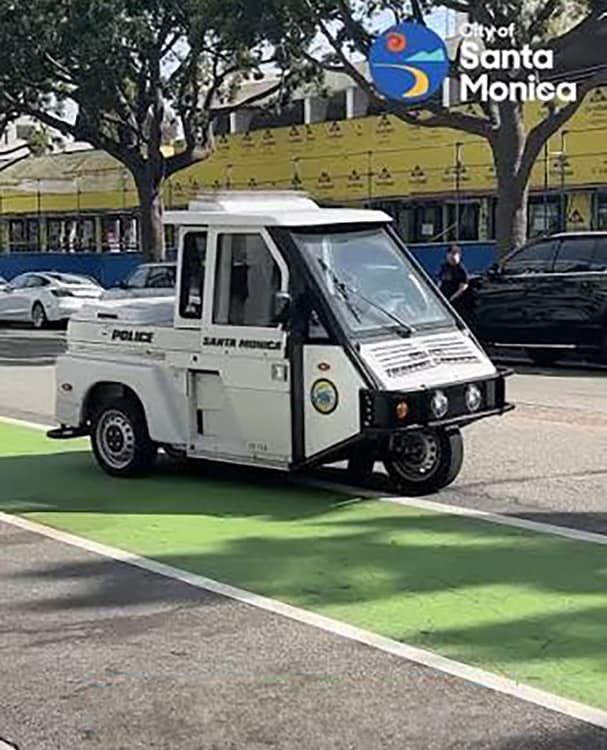
Santa Monica to Add License Plate Readers to Parking Enforcement Vehicles:
What Drivers Need to Know
Santa Monica is moving toward a more technology-driven approach to parking enforcement, with license plate recognition cameras planned for parking enforcement vehicles. The goal is to help parking officers identify vehicles that have exceeded posted parking limits and enforce parking regulations more efficiently.
We’ve already reported about these vehicles being outfitted with cameras which detect stopped/parked violations in bus lanes. Detecting general parking violations now adds an additional technological layer.
For residents, commuters, shoppers, and visitors, the change is a reminder that managing parking time accurately will become increasingly important. Drivers should understand how the technology works, which parking rules may be enforced, and when the new system is expected to take effect.
How the new license plate readers will work
The City Council voted 7–0 on October 13, 2026, to approve a five-year contract worth up to $700,000 with ComSonics Inc. for an automated license plate recognition (ALPR) system. The cameras will be installed on nearly all of the three-wheeled parking enforcement vehicles used by the Santa Monica Police Department’s Traffic Services Unit.
Rather than relying on parking officers to walk through lots checking dashboard receipts or marking tires with chalk, the system will scan license plates as enforcement vehicles patrol.
- Paid parking: In city-operated lots, the system will help identify vehicles whose license plates have not been registered with a parking payment.
- Time-limited parking: Repeat scans will help officers determine whether a vehicle has remained parked beyond the posted time limit.
- Residential permit zones: The technology will help identify vehicles that do not comply with applicable residential parking permit restrictions.
- Parking and traffic safety: More efficient enforcement could free officers to focus on violations such as blocked bike lanes, obstructed crosswalks, double parking and vehicles overstaying in loading zones.
Where will enforcement take place?
1. Municipal parking lots
Santa Monica operates 30 municipal lots with approximately 6,212 paid spaces. These locations are a major focus of the new system, which is intended to make payment checks faster and more consistent.
2. Residential permit parking areas
Nearly 70% of Santa Monica’s residential districts have permit restrictions. License plate scans will help officers identify vehicles that do not comply with the rules in these designated zones.
3. Streets with posted time limits
Repeat passes can help officers monitor how long a vehicle remains parked in a time-restricted space. Drivers should continue to follow all posted signs, meter requirements and curb restrictions.
The city has not published a complete route-by-route deployment map. Drivers should not assume that only downtown or beach-area parking will be affected.
The cameras do not mean every detected vehicle automatically receives a citation. Under the announced procedures, parking enforcement officers must act on violations in the field rather than issue citations retrospectively from stored scan data.
Implementation timeline: What happens next?
As of this posting, here is the basic timeline for this new enforcement protocol-
Oct. 13
2026
City Council approval
The council approved the five-year contract, authorizing procurement and implementation of the system.
FY 26–27
Funding and implementation
The contract allocates $600,000 to fiscal year 2026–27, with $100,000 identified for later years, subject to future budget approval. This is the planned funding period, not a confirmed public launch date.
TBD
Installation and operational rollout
As of October 24, the city has not announced a specific date when the cameras will begin operating. Drivers should watch for official updates rather than assume enforcement begins on a particular day.

HOW DRIVERS SHOULD PREPARE
The best approach is to treat parking rules as strictly enforceable now and establish habits that will continue to work once the system is active.
1. Register your license plate when paying
In paid city lots, carefully follow the payment instructions. If the system requires your plate number, enter it correctly and confirm that the payment is complete. Do not assume a payment made for the wrong plate will protect your vehicle.
2. Set a reminder before your parking expires
Use your phone’s timer or calendar. Set an alert 10–15 minutes before the paid period or posted time limit ends, allowing time to return to your vehicle or arrange lawful additional parking.
3. Know the difference between payment time and parking limits
Paying for additional time does not necessarily authorize you to remain in a space beyond a posted maximum stay. Always read the signs and follow any applicable restrictions.
4. Keep residential permits current
Check your permit’s validity, vehicle and license plate details, and the rules for the specific block where you park. Do not assume a visitor permit or temporary authorization covers every zone.
5. Never rely on the absence of an enforcement officer
Automated scanning is designed to increase coverage and reduce the need for repeated manual checks. A space that appears to have gone unchecked may still be subject to enforcement.